
Where Light Begins: Lessons from the Dark of Advent
Based on an Advent recollection talk by Rev. Fr. Pachomius Ma. San Juan, OSB
Advent has always carried a peculiar tenderness. While the world prepares for Christmas with noise, glitter, and speed, Advent itself prefers a quieter register. Gentle, muted, and contemplative. It is the season that invites us not into frenzy, but into stillness; not into spectacle, but into silence.
There is a somber beauty to Advent, a subdued mood that asks the heart to slow its pace. In many parts of the world, it coincides with the onset of winter – the shortening of days, the deepening of darkness, the instinctive turning inward. Even in places without snow, we feel it in the early evenings and dim mornings. Light thins; shadows lengthen; the world loosens its grip on hurry. Nature itself becomes a spiritual teacher.

Advent reminds us that the soul needs the same pause the season provides. We cannot hear God in perpetual motion. We communicate with Christ only in the “interior room,” the silence, solitude, and stillness we carve out deliberately. Without these, there is no space where faith can breathe.
The quiet we carry into the world
Even our Heartspace communities reflect this paradoxical character of Advent. We gather, we feast, we laugh, but the noise we create is different. It is softened, refined by the practice of meditation and prayer. It is noise touched by silence. The conversations we share are shaped by the hours we have spent rooted in stillness.
This is the heart of Advent: a season of quiet that trains us to remain steady in a world swirling with unrest.
Lighting candles in the darkness
Every Sunday of Advent, Christians light a candle. It is a small gesture, easy to overlook, but profoundly symbolic. As the physical world grows darker, we answer with flame. As night expands, we mark the encroaching shadows with a stubborn glow.

The four candles, hope, peace, joy, and love, are not decorative. They are reminders of what we are asked to practice in a time marked by deception, division, and distrust. We light them not just on the wreath, but in our behavior, our speech, our choices.
And when Christmas ends, we do not snuff them out. The world never stops needing hope; the world never stops needing peace. Advent is only the yearly rehearsal for what we must live daily.
Advent as penance and return
Though we often associate penance with Lent, Advent shares the same invitation to conversion. It is a season of coming home, of leveling mountains of pride, filling valleys of neglect, and clearing the crooked paths of our hearts so that God may enter unhindered.
Even our liturgy mirrors this: the purple vestments, the absence of the Gloria. Advent is joyful, yes, but its joy is born of humility and longing.

Peace on the edge of turmoil
The Gospel verse “Peace I leave you, my peace I give you” carries a striking context. Jesus spoke these words not in serenity, but in the shadow of betrayal and suffering. His peace was not delivered from comfort; it was forged in the storm.
Advent begins with one candle flickering against the darkness, just as Christ spoke of peace while standing at the brink of violence. The peace Jesus offers is not the world’s version of calm, nor a denial of conflict. It is a peace that stands beside fear, not apart from it. A peace that enters chaos and steadies the heart from within.
Stability of heart: The quiet strength Advent teaches
Christian tradition speaks of stability of heart, a rootedness that does not waver even when circumstances do. It is possible to stay in one place physically while the heart wanders restlessly from distraction to distraction. True stability is interior.
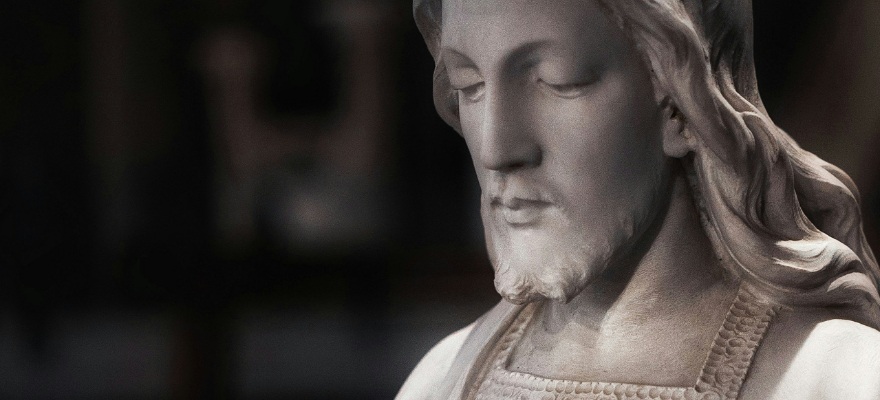
Jesus models this perfectly: sleeping through storms, standing unshaken before Pilate, facing death with trust. His heart remained anchored in the Father. And Advent calls us to cultivate the same rootedness.
A stable heart does not escape trouble. It knows how to stand in trouble without collapsing.
Shalom: Peace that holds everything together
In Scripture, peace is not merely the absence of conflict. The Hebrew word shalom means wholeness, harmony, integrity. It holds together what seems opposed: joy and sorrow, calm and turbulence, order and disorder.
We often imagine peace as a clean, conflict-free state. But Advent reminds us that real peace can coexist with struggle. It is a unifying force, not a separating one.
God enters our chaos
One of the most profound truths of Advent is this: God enters the mess. He comes not to sanitized lives but to broken ones. He steps into our social turmoil, our moral confusion, our fractured relationships.
And He does so at great risk. Entering another person’s chaos is always costly, but this is exactly what mercy does.

Because God is Immanuel, God-with-us, peace becomes possible even where it seems impossible.
Hope that is not wishful thinking
Christian hope is not optimism or sweet reassurance. It is not pretending that everything will be fine if we “go with the flow.” Hope is anchored in God’s promise, nothing more and nothing less. And because God keeps His word, we learn to wait.
Waiting becomes unbearable only when anger, cynicism, or fear take over. Advent teaches us how to wait with openness, creativity, prayerfulness, and patience.
Hope is not naïve. Hope is courageous.
Peace as mission
The peace Christ gives is not a trinket we keep for ourselves. It is a mission. We are sent as carriers of peace, into families that hunger for honesty, into communities that long for decency, into public spaces choking on division.
We bring peace most powerfully not through argument, but through presence. Through the steadiness of a heart rooted in God. Through the refusal to let anger or fear set the agenda. Through disagreement carried out with humility and reverence.

Peace is not passive. Peace acts. Calmly, faithfully, persistently.
The heart of Advent
Advent stands in the tension between chaos and calm, darkness and dawning light, anxiety and serenity. It trains us to remain upright in the space where all these forces meet.
And we can stand only because our hearts are anchored in Christ, the One who stands in every storm without wavering.
This is the invitation of Advent: to become people who carry light into darkness, stability into confusion, courage into fear, and peace into a world that aches for it.