Repentance as Return
Based on a homily by Rev. Fr. Pachomius Ma. San Juan, OSB
Every Advent, the Church asks us to stay awake, to be alert, to pay attention, not just to the world around us, but to the quiet terrain within. Last Sunday’s Gospel set the tone with a call to watchfulness. This Sunday adds the next step: repentance. And for many of us, that word arrives carrying heavy baggage.
We tend to imagine repentance as a moral clean-up, a spiritual reprimand, or an urgent demand to “do better next time.” It can sound like a dreary summons to self-improvement. But the older I get, the more I realize that the deepest meaning of repentance is not about perfection at all. It’s about coming home.
Beyond fixing ourselves
When I was younger, I believed repentance was essentially about correcting behavior: stop doing wrong, start doing right, pull yourself together, be good. If we all tried hard enough, I thought, everything – from personal problems to national struggles – would eventually fall into place.
But real life complicates that tidy narrative. There are moments when we try with all our might, make the right choices, follow the rules, and the result is still emptiness. Or disappointment. Or a sense that something essential is missing.

So what if repentance is less about “fixing” and more about recovering?
What if the call to repent is actually an invitation to return to the person God created us to be, the person we’ve forgotten, neglected, or pushed aside?
Turning toward our true center
Repentance, in this sense, is not a punishment but a path. It’s the slow, steady turning back toward our center after life has pushed us off course.
When we get lost in beauty – a sunset, a conversation, a piece of music – and feel deeply at home in ourselves, that is a form of repentance: a brief reunion with our truest self.
When sorrow, betrayal, or jealousy hardens our heart and we realize, This isn’t who I want to become, that too is repentance: a moment of clarity that draws us back toward gentleness.
When we review the day at night and regret a word or action, and something in us whispers, You’re more than this, that is repentance: the beginning of return.
None of these moments are about guilt. They are about recognition. They are about remembering that we carry an original beauty, God’s own beauty, within us. A beauty we sometimes lose sight of, but never truly lose.
Repentance as reclaiming the beautiful self
Repentance is the journey of reclaiming what is most authentic in us. It is the shift from self-rejection to self-remembering. It asks us to stop identifying with our mistakes and instead orient ourselves toward healing.
If guilt says, “Look at what you did,” hope says, “Look at who you can still become.”

This is why repentance is filled with possibility. It frees us from being trapped in old stories so we can walk toward new ones. It unhooks us from our past and reopens the road to our future.
And as we walk, we grow into God’s own clothing – love, forgiveness, wisdom, mercy, peace. Not as costumes we try on, but as garments tailored to us from the beginning.Because repentance doesn’t force us into someone else’s life. It restores us to our own.
Face to face with the One who knows us
At the heart of repentance is relationship. As we return to ourselves, we find that God has been there all along, recognizing us even when we could not recognize ourselves.
In the gaze of the One who created us, we hear:
I know you.
I see my own beauty in you.
Come home. You are beloved.
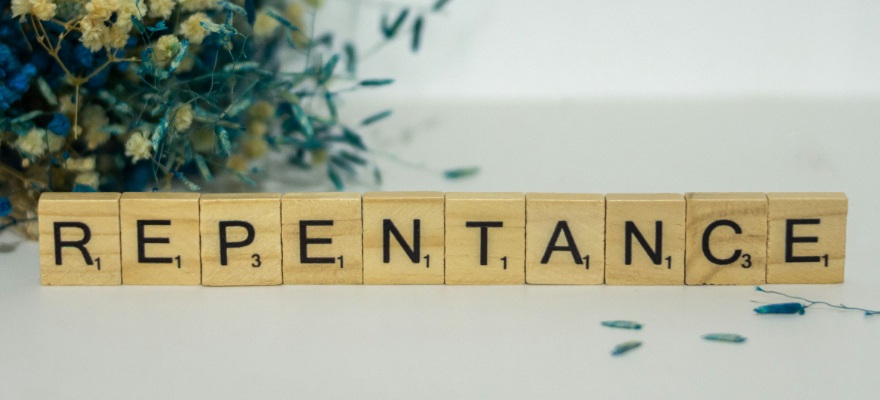
That is the real meaning of repentance: not shame, but return. Not dread, but hope. Not punishment, but the rediscovery of who we really are.
A few questions for the journey
As you continue this Advent, perhaps these questions might help illuminate the path home:
What keeps you from living the life you most deeply desire?
What parts of yourself have you ignored, forgotten, or doubted?
What habits, fears, or narratives hold you back from your authentic self?
What would it take to move toward that truer, freer version of you?
What small turn, just one, could you make today?
Advent is a season of waiting, yes, but not passive waiting. It is the quiet, courageous decision to turn, even by a degree, toward the light that is already drawing near.
And every turn, no matter how small, is repentance.