
Always Beginning- An Orientation to Christian Meditation
Based on a talk by Rev. Fr. Pachomius Ma. San Juan, OSB
Every first Sunday of the quarter, our community pauses for what we call an orientation-themed reflection. For some, it is an introduction. For others, a reminder. For all of us, it is an invitation to begin again.
That phrase, begin again, sits at the heart of Christian meditation as taught by John Main. No matter how long we have been practicing, we are always beginners. Meditation does not reward seniority. It asks only for faithfulness.
A direct path to God
Christian meditation is a way of prayer that leads us into silence and stillness so that we may be present to God. It is strikingly simple, and deliberately so. When we meditate, we are not thinking about God, imagining God, reading about God, or even reflecting on Scripture. During meditation, we simply are with God.
This is not an intellectual exercise. Meditation is a work of the heart. Its aim is not understanding but presence. As John Main taught, meditation takes us beyond words, thoughts, and images, right into the mystery of life itself. The psalmist’s invitation, “Be still and know,” becomes not a poetic metaphor but a lived doorway. Stillness is the path. Silence is the threshold.
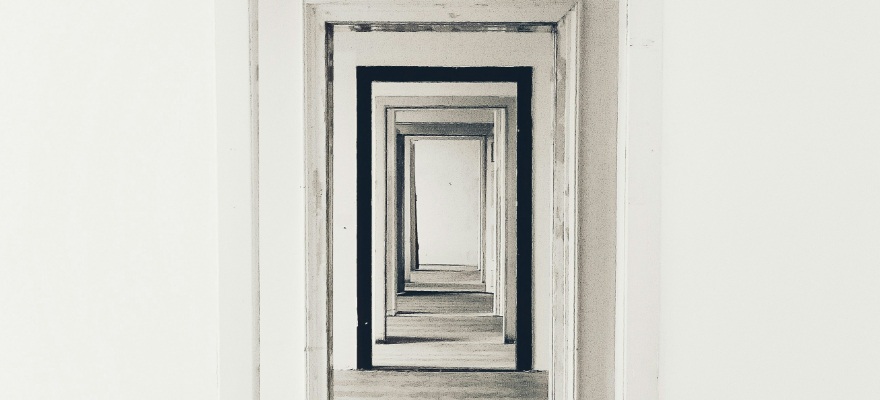
Christian meditation does not replace other forms of prayer, nor does it diminish them. It is simply more direct. We lay aside concepts and explanations. We stop trying to grasp God with the mind and instead consent to God’s presence within us. The Kingdom of God, as the Gospel of Luke reminds us, is not “out there.” It is within. Meditation is the brave step inward.
An act of faith, not control
At its core, meditation is an act of faith. We do not make God present by praying; God is present whether we pray or not. Meditation is not about controlling outcomes or producing spiritual experiences. It is not a mental ascent or a technique for self-improvement.
Yes, meditation has a method, but mastery of the method does not equal success. We cannot measure or calculate the fruits of meditation. Instead, we loosen our grip on control and allow ourselves to be led by grace. This surrender is faith.

Distractions are not failure
For beginners especially, distractions can feel like the great enemy. Thoughts arrive in crowds. Memories, plans, worries, emotions, all clamor for attention. The temptation is to judge our meditation as “good” or “bad” based on how distracted we feel.
This is a mistake.
There is no such thing as a good or bad meditation. Distractions do not mean failure. They are simply part of being human. What matters is not the quality of our experience but the faithfulness of our practice. With distractions or without them, we show up. That is enough.

For seasoned meditators, the same truth applies. Familiar teachings are not a sign that we have “arrived.” They are reminders that we are always beginning. Expectations, especially spiritual expectations, must be released. Along with them, we must resist spiritual pride, comparison, and vanity. Meditation is not a competition. Each journey is unique, guided by God’s timing, not our own.
Humility and struggle
One of the quiet gifts of meditation is humility. Most of us can count on one hand the times meditation feels blissful or consoling. More often, it feels like struggle, sometimes even a kind of interior fistfight. And yet, we remain faithful. Why?
Because God is faithful.
Meditation reminds us again and again that grace, not effort, sustains us. We return daily not because we are strong, but because we are called. This ongoing return forms humility and trust.
The sacred word
At the center of John Main’s teaching is the faithful repetition of the sacred word, or mantra, what John Cassian called the formula. The mantra traditionally used is Maranatha, an Aramaic word meaning “Come, Lord.”
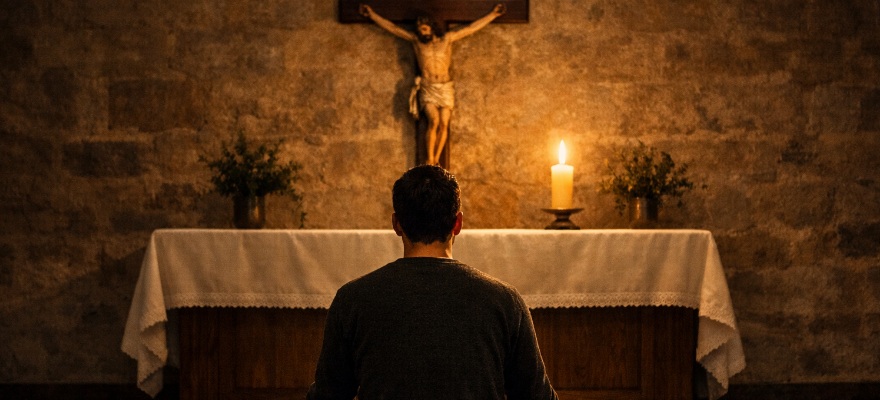
It is important that the mantra remain untranslated and emotionally neutral. When rendered in our own language, words easily awaken memories, desires, and emotional currents. In meditation, this is precisely what we seek to let go. The mantra is not a prayer in the usual sense, nor a magical word. It is a gentle anchor, a way of releasing thoughts and self-preoccupation so we may remain present to God.
The mantra is said silently, gently, continuously, without reflection or analysis, from the beginning to the end of the meditation period. Even when moments of deep silence arise, John Main advises us to remain faithful to the mantra. Silence may come and go; fidelity remains.
The practice
Meditation begins with the body. Sit comfortably with the spine upright, on a chair or on the floor, as long as the posture is stable and alert. Close the eyes gently. Then begin the mantra.

The usual rhythm is twice a day, every day. Beginners may start with shorter periods and gradually build up, aiming for 20 to 30 minutes per sit. Busyness is not an excuse to skip meditation; it is often the very reason we need it. Faithfulness matters more than how we feel.
Meditation is not about seeking pleasant experiences. If that is our goal, meditation will disappoint us. What matters is presence, simply showing up. Silence is not emptiness for its own sake; it is relationship. We empty the mind so that the heart may open. Silence is the moment when we stop talking about God and allow God to speak within us.
The fruits of silence
Over time, meditation bears fruit, but rarely in the ways we expect. The fruits often appear first in daily life and are noticed by others before we recognize them ourselves.
There may be greater inner freedom: less attachment, less self-consciousness, less preoccupation with reputation or control. With inner freedom comes peace. There may be growth in compassion: more patience, forgiveness, and gentleness toward others and toward ourselves. Humility deepens. Judgment softens. Life becomes quieter at the center.

Taken together, these fruits point to a life becoming more Christ-centered. When life is centered on Christ, we find that we can carry what once overwhelmed us, not by our own strength, but by Christ’s power at work within us.
Begin again
For beginners: persevere gently. The early stages are often the hardest. Stay faithful.
For those who have practiced for years: begin again. Do not rest on experience or technique. Meditation is not about perfection; it is about faithful presence. It is a meeting of presences, our presence offered to the presence of God.
John Main summarized the way of meditation in three words: simplicity, fidelity, trust. There is nothing complex here. Sit. Say the mantra. Be faithful. Trust the Lord.
And tomorrow, begin again.
One thought on “Always Beginning- An Orientation to Christian Meditation”
Thank you Father.
Praying with you all.
Blissful 2026!