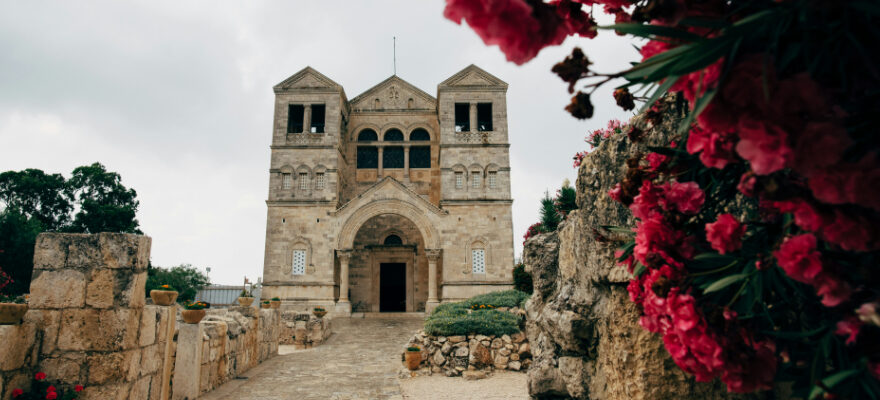
When the Mountain Ends: The Light of the Transfiguration
Based on a homily by Rev. Fr. Pachomius Ma. San Juan, OSB
There are moments in the spiritual life that feel luminous, moments when everything becomes clear, when faith feels alive, and when God seems almost tangible. The Gospel account of the Transfiguration is one of those moments.
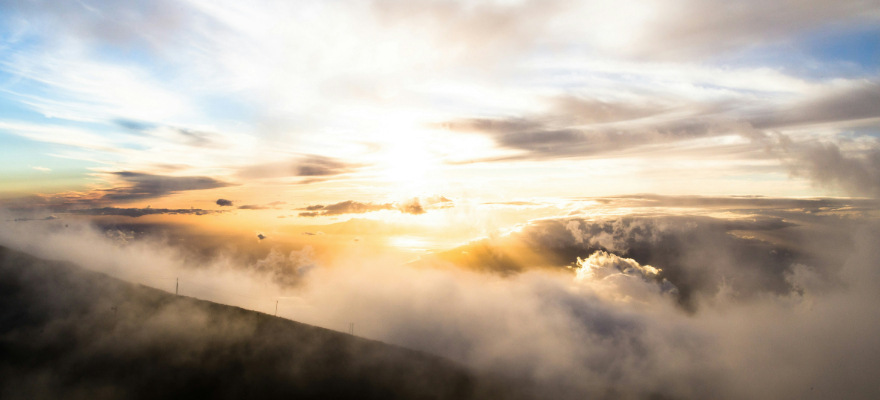
On that mountain, the disciples witnessed something extraordinary. Jesus was transfigured before them in glory. The voice of the Father was heard. Moses and Elijah – two towering figures of Israel’s faith – appeared beside Him. It was, in a sense, an all-star gathering where heaven touched earth. For a brief moment, the veil between the two seemed to lift.
No wonder the disciples wanted the moment to last.
Peter’s instinct was simple and deeply human: “Let us build three tents.” In other words, let us stay here. Let us preserve this moment. Let us hold on to this glory.
But the mountain was never meant to be a permanent dwelling.
Sustenance for the journey
After the vision fades, Jesus gives a curious instruction: “Do not tell the vision to anyone until…” The command suggests something deeper than secrecy. It is as if Jesus is saying: keep this experience in your heart. Treasure it. Relish it. Because the road ahead will be difficult.
The Transfiguration took place before the journey toward the Passion. Soon the disciples would see betrayal, suffering, and the cross. Their faith would be tested. And when that happened, they would need something to hold onto, a memory of glory that would strengthen them in the darkness.
In many ways, this is how faith unfolds for us as well.
Our Transfiguration moments
We all have “mountain experiences.” They might come during a retreat, a moving liturgy, or a moment of deep meditation. Sometimes they arrive unexpectedly. In silence, in prayer, or even while standing before the beauty of nature. In those moments, something within us awakens. We feel comfort, clarity, or peace. For a while, everything seems illuminated.
But life does not remain on the mountain.
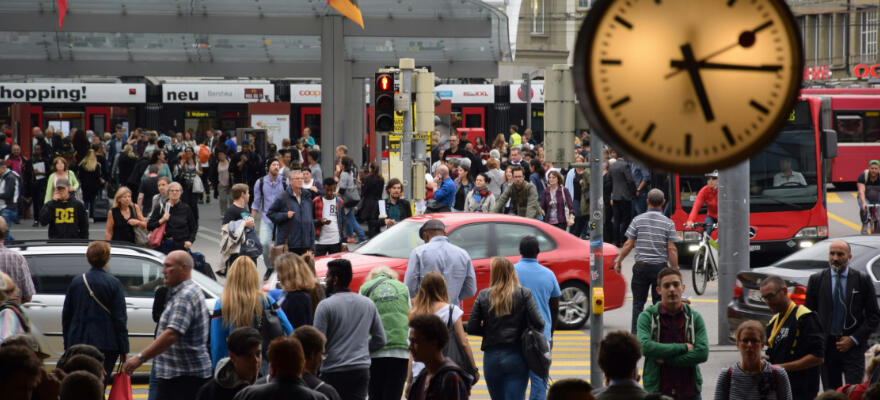
Eventually we return to the valley. To daily routines, responsibilities, tensions, misunderstandings, bills, and ordinary work. The glow fades, and the spiritual high passes. Like Peter, we sometimes wish we could remain where everything felt clear and radiant.
Yet the Gospel reminds us that faith is not proven on the mountaintop. It is lived in the valley.
The mountain strengthens us for the journey, but the journey itself takes place in ordinary life.
The sustaining light
This is the first lesson of the Transfiguration: moments of spiritual consolation are gifts that prepare us for hardship. They are not escapes from reality. Rather, they give us hope when the road becomes rough. When life brings tears, confusion, or disappointment, we can return to those moments of grace. Their memory reminds us that God has been present before, and will be present again.
Holiness in the hidden
A second lesson follows closely behind: God is not found only in moments of glory.
We easily recognize God when life is bright, when we are affirmed, appreciated, and seen. But much of our spiritual life unfolds quietly, almost invisibly. Most of our days are not dramatic. They consist of small choices: patience with someone difficult, honesty when cutting corners would be easier, forgiveness when resentment feels justified.
Holiness often looks like nothing spectacular at all.
It appears in anonymous acts of kindness. It appears in quiet service that seeks no applause. It appears in forgiving someone and refusing to keep reopening the wound.

There is a beautiful image sometimes used to describe God’s mercy: when God forgives our sins, He throws them into the ocean of mercy and posts a sign that says, “Fishing not allowed.” Forgiveness means letting the past remain in the depths rather than constantly pulling it back to the surface.
These small acts, hidden acts, are where much of real discipleship happens.
Light and dark in kinship
Finally, the Transfiguration teaches us that glory and suffering belong to the same story.
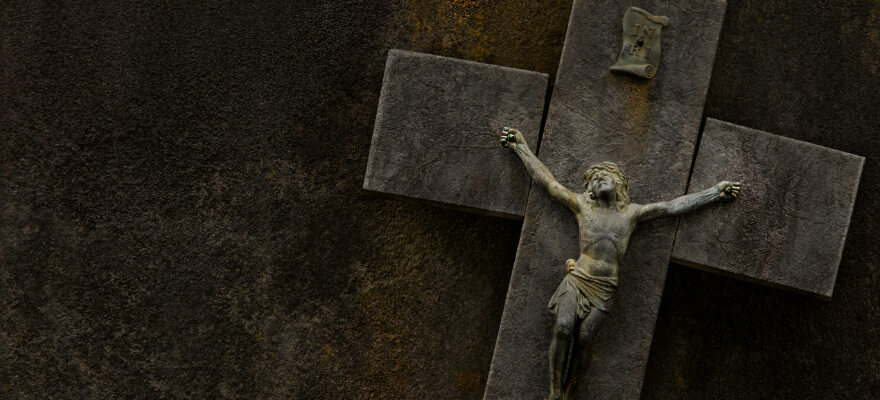
The mountain of Tabor cannot be separated from the garden of Gethsemane. The brightness of the Transfiguration stands beside the darkness of the cross. They are not opposites but part of one unfolding love story. God’s love remains the same in both places, unchanged in moments of joy and in moments of anguish.
This means that when we walk through valleys – times of loss, confusion, or weariness – we are not walking alone. The same God we encounter in moments of light walks with us through the valley of tears.
Carrying the gift
As Lent continues, the invitation is simple: cherish the mountain moments when they come. Receive them fully. Let them nourish your heart. Their memory will sustain you when the path grows difficult.
But do not cling to them.
Because eventually we must come down the mountain.
And when we do, we bring something with us.

We bring the quiet light we received, into a world that often feels noisy, anxious, and wounded. We bring compassion where there is hardness, patience where there is tension, forgiveness where there is bitterness.
In other words, the purpose of the mountain is not escape. It is transformation.
We descend not empty-handed, but carrying light.
Holiness, again, is not about doing spectacular things. More often it is about doing ordinary things with extraordinary love, small acts done faithfully, quietly, day after day.
And while the world may not notice them, God does.
The light of the Transfiguration does not end on the mountain. It continues wherever disciples carry it. Into ordinary life, into hidden service, and into the valleys where the world most needs hope.