Meditation: A Path to the Heart of Prayer
Based on a talk by Rev. Fr. Pachomius Ma. San Juan, OSB
Across cultures and faiths, meditation has long been practiced as a path to inner stillness and divine connection. From Sufi mystics in Islam to Zen practitioners in Buddhism, from Hasidic Jews to Hindu sages and Christian monks, meditation has quietly spanned traditions, serving as a shared language of the soul. This universality does not dilute its power; rather, it highlights a deep truth: all people yearn for God.
In Christianity, meditation has deep roots, cultivated by monks who sought silence and simplicity in the Word of God. Their example reveals that meditation is not an escape from life, but a way of entering it more fully, by beginning in the heart of prayer.
The nature of prayer: A life lived in communion
Early Christian teachers saw prayer not as one activity among many, but as a definition of life itself. “The way you pray is the way you live,” they taught.
Spirituality is, in essence, prayer that has come alive. It is not limited to words said in church or whispered in silence. It is seen in the Eucharist, in novenas and rosaries, in moments of thanksgiving or petition. Every sincere form of prayer matters. All flow from, and return to, the same source.

The Eucharist remains the highest form of prayer, but it is not isolated. Like a wheel, prayer has a hub and many spokes – sacramental, devotional, contemplative, charismatic. For the wheel to turn, to be useful, it must touch the ground. That ground is daily life. Prayer must live in our relationships, responsibilities, joys, and even our struggles.
The wheel of prayer: Stillness at the center
A wheel is dynamic, in motion, just as a healthy prayer life should be. But it also has a center, a still point. This stillness is essential. Without it, movement becomes chaos. The center of the prayer wheel is the prayer of Christ. All forms of prayer, again, are like spokes connected to this hub. When we lose touch with the center, the wheel wobbles; our spiritual lives scatter.

To reach the hub, the heart of Christ, silence, simplicity, and stillness offer a direct path. This is where Christian meditation comes in.
Meditation in the Christian tradition
Meditation in Christianity is not about simply emptying the mind. Neither is it about escaping reality. It is about meeting God through stillness. Early monks, like John Cassian (whose teachings were revived by John Main), recommended for this purpose the repetition of a sacred word or phrase. One such word is “Maranatha,” Aramaic for “Come, Lord.” We repeat it not to achieve some trance, but to stay focused, to resist the tide of thoughts and distractions.
Meditation purifies the heart. It introduces us to poverty of spirit, a spiritual openness and dependence on God. It teaches us as well to be awake, alert, watchful. As Jesus urged his disciples: “Pray that you may not fall asleep/be tempted.” This is why the time and condition for meditation matter. It is best practiced early in the day upon waking and well before bedtime but not just after eating. A heavy meal or a sleepy mind dulls the alertness required for true stillness.

Stillness as strength
Stillness is not passivity. It is a vigilant, receptive space in which God can speak. Like Elijah on the mountain, we discover that God is not in the noise, but in the still, small voice. Meditation helps us hear it.
Our lives, like the wheel, spin with activity – work, relationships, service. Again, all this happens at the rim. But without a quiet center, we are easily thrown off balance. It is from the stillness that our movement becomes meaningful.
Jesus, Master of contemplation
In the gospel of Matthew, Jesus lays out the foundational attitudes for contemplative prayer:
- Interiority: “…go into your inner room…” (Mt 6:6). Prayer begins within.
- Trust: “…do not babble like the pagans…” (Mt 6:5). God knows your need.
- Calm: “…do not worry about your life…” (Mt 6:25). True peace lies beyond material needs.
- Attentiveness: “…seek first the Kingdom of God…” (Mt 6:33). Align your priorities.
- Presence: “…do not worry about tomorrow” (Mt 6:34). Be here, now.
These are the very same attitudes cultivated in Christian meditation: inner quiet, trust, equanimity, attention, and presence.
Christ at the center
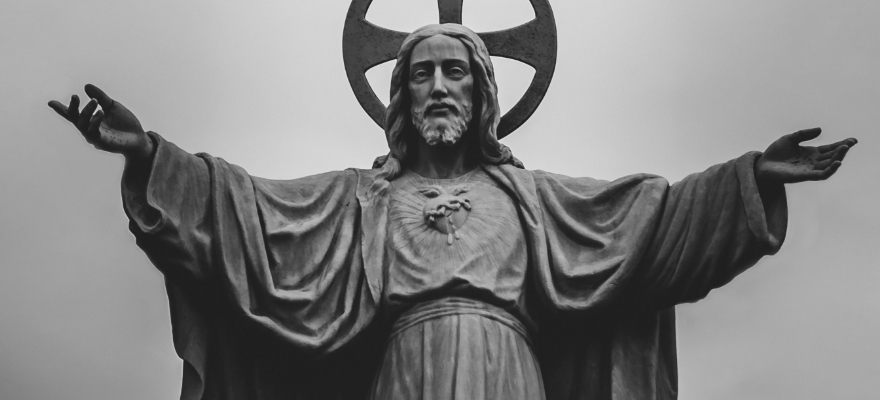
Ultimately, all Christian prayer is Christ-centered. Christ is both the source and the destination. He prays within us, draws us into His prayer, and leads us back to the Father. Meditation is not a detour; it is a direct path into this mystery.
The hub of the wheel is Christ, in your heart. And the act of meditation draws your scattered thoughts, desires, and distractions back to center. From there, your whole life can begin to move in harmony with God’s will.
A practice worth the effort
Meditation enhances every other form of prayer. It enriches the sacraments, deepens your devotions, and opens your heart to transformation. But it takes practice. Twice daily is recommended. Start small, stay faithful. It is not always easy, but it is always worth it.
Be patient. Be persistent. Be still.
God is already there, waiting in the silence.