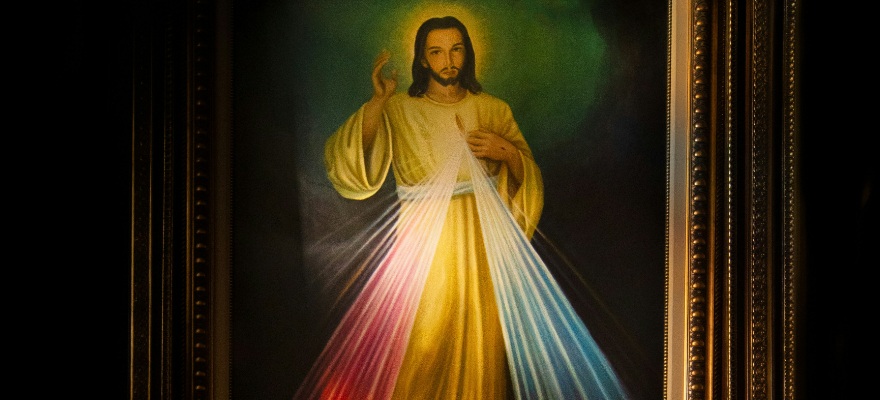
Divine Mercy and the Doorway of Stillness
Based on a talk by Rev. Fr. Pachomius Ma. San Juan, OSB
On this celebration of Divine Mercy Sunday, a quiet question rises: How do we truly encounter mercy, not just as an idea, but as a lived reality?
One surprising answer is this: through stillness.
The invitation beneath the noise
We often think of mercy in action. Acts of forgiveness, compassion, reconciliation. But before mercy becomes something we give, it is first something we receive. And we receive it most clearly in silence.
When we grow still, when we set aside the noise of worries, regrets, anxieties, and self-judgment, we begin to notice something profound:
There is a presence that waits. Not a presence that condemns, that demands explanations, that keeps score. But a presence that simply loves. This is the heart of Christ, the wellspring of Divine Mercy.
Beneath everything that troubles us is a quiet invitation: “Come home. I am here. I am waiting.”
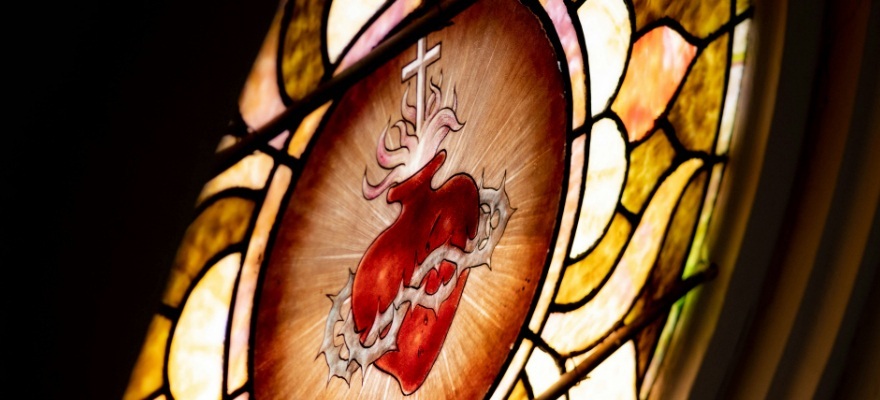
The heart of Christ: vast enough for our brokenness
We often try to meet God where we think we should be. Better, holier, more put together. But Divine Mercy reveals a different truth: Christ meets us where we are. Not in our imagined perfection, but in our real condition. Our wounds, our confusion, our failures, our sorrow.
And when He meets us there, there is no accusation. No condemnation. Only an embrace.
The heart of Christ is vast, expansive enough to hold everything in us that feels fractured or incomplete. We do not need to fix ourselves before entering that space. We are simply invited to step in.
Meditation as a doorway
This is where meditation becomes so powerful. Meditation is not an escape from life. It is not avoidance. Rather, it is a doorway, a simple, quiet passage into the experience of mercy.

When we pause, when we sit in silence, something begins to shift: We become aware of our own need for compassion. We recognize our imperfections without harshness. We begin to soften toward ourselves.
And this is crucial, because the first recipient of mercy must be ourselves. Not in a self-centered way, but in a truthful way. We cannot offer compassion we refuse to receive. We cannot extend patience if we deny it to ourselves.
Meditation teaches us to befriend ourselves, gently, honestly, so that we may do the same for others.
Mercy flows both ways
When we begin to receive mercy in stillness, it does not remain contained within us. It flows outward. The patience we extend to ourselves becomes patience for others. The forgiveness we long for becomes forgiveness we offer. The peace we encounter within becomes peace we bring into the world.

Meditation is like a narrow passageway. Small and simple, yet alive with movement. Mercy flows in, and mercy flows out.
Mercy is not weakness
There is a common misunderstanding that mercy is softness or weakness. But in truth, mercy requires strength. To forgive, to be patient, to let go of resentment – these are not easy things.
Mercy is rooted in something deeper: love. Love comes before mercy, and love sustains it. And meditation brings us back, again and again, to this fundamental truth: We are loved. Not conditionally, not eventually, but now.
This is the foundation of everything. We can love because we are loved. We can forgive because we are forgiven.
A story about light
There is an old story about a rabbi who asked his students how to tell when night has ended and day has begun.

They offered answers. When you can distinguish animals, when you can identify trees in the distance. But the rabbi said no.
Finally, he gave his answer: “It is when you can look at the face of any person and see your brother or your sister. If you cannot do this, no matter what time it is, it is still night.”
This is the heart of Divine Mercy. Even in the full brightness of day, if our hearts hold hatred, resentment, or refusal to forgive, then we remain in darkness. But when we begin to see others through the light of Christ, when we recognize them as kin, as fellow beloved, then the light has truly dawned.
Living mercy daily
Divine Mercy is not meant to be confined to a single feast day. It is meant to flow through us, in ordinary, daily ways.
And it begins simply: Take a moment each day to be still. Breathe gently. Let go of the need to be perfect. In that quiet, allow yourself to be met, not as you wish you were, but as you are. Let the mercy you receive become the mercy you give.

A heart spacious enough for all
In the end, we are invited to become what we encounter: a heart spacious enough for others. A place where people feel welcomed, not judged. A place where brokenness is not rejected, but embraced. A place where love quietly does its healing work.
Because the more we dwell in the heart of Christ, the more that heart begins to live in us.
And through us, Divine Mercy continues to reach the world.