The Good Shepherd Kind of Love
Based on a homily by Rev. Fr. Pachomius Ma. San Juan, OSB
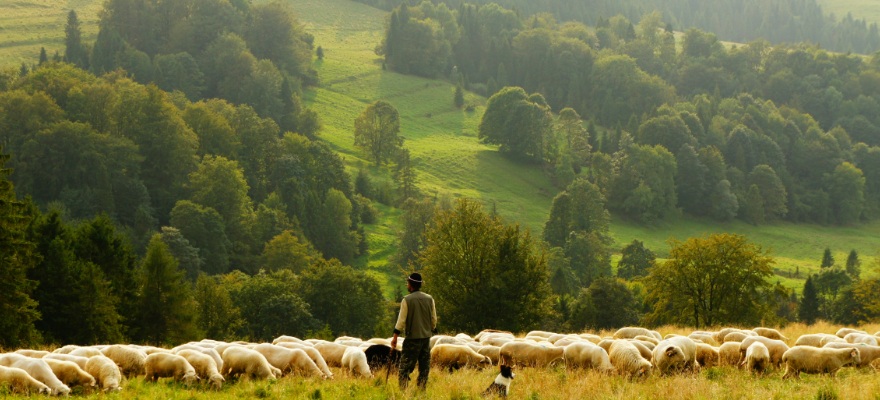
We often hear about the Good Shepherd, the one who lays down his life for his flock, and we instinctively think of Jesus. And rightly so. The image is powerful: a shepherd who does not run at the first sign of danger, but stays, protects, and ultimately gives everything for the sake of others.
But what if that image is not only meant to be admired? What if it is meant to be lived?
Beyond admiration
It is easy to keep the Good Shepherd at a distance, to see him as someone holy, heroic, and far removed from the ordinary rhythms of our lives. Yet the deeper invitation of the Gospel is far more personal: What if we, too, are called to love this way?
What if being a “good shepherd” is not a title reserved for the divine, but a way of being entrusted to each of us? In our marriages. In our parenting. In our friendships. In our work. In the quiet, unseen decisions we make every day.

The question is no longer just Who is the Good Shepherd? It becomes: Where is that kind of love in my life today?
Why love struggles
A friend once asked, “Why does love seem to have such a hard time in the world today?”
It’s a question that echoes loudly in a world marked by conflict, division, and suffering. The scale of violence and brokenness can feel overwhelming. Perhaps there is no simple answer. Or perhaps the question is not meant to be solved, but to be lived. Because the Gospel does not merely explain love. It redefines it.
Love is not a feeling
We are used to thinking of love as something we feel. Something warm, comforting, even romantic. We associate it with sweet words, thoughtful gestures, shared attraction, and emotional connection. But the love of the Good Shepherd moves beyond all of that. It is not primarily a feeling. It is a choice. And because it is a choice, it becomes action.
Love is the truth we speak. The truth we live. The truth we embody, especially when it costs us something.

When love costs you something
Real love always involves loss. Not necessarily dramatic loss, not always life and death, but something quieter and more familiar: letting go of pride, surrendering your plans, setting aside your preferences, releasing the need to be right, giving up comfort and convenience.
Every time we do this, something in us “dies.” And yet, strangely, that is where love begins. Because love, in its truest form, is giving away something you cannot get back, and not expecting it to return. That is what makes it unconditional. That is what makes it real.
The best of who you are
Think of the moments when you were at your best. Not when you were praised or recognized, but when you gave yourself freely. When you poured yourself out for someone else’s good. When your only desire was to love, to serve, to give.
Those moments carry the unmistakable mark of Good Shepherd love. They reveal something essential: You are capable of this kind of love.

Questions that matter
Pause for a moment and sit with these:
- Who has loved you so deeply that you knew they would give everything for you?
- Who have you loved in that same way?
- What did that love ask of you?
- What did it offer you in return?
Your answers are not abstract reflections. They are glimpses of a love that is already alive in your life.
All or nothing
The love of the Good Shepherd is not partial. It does not hold back. It does not calculate. It is all or nothing. It reaches beyond comfort zones and personal boundaries. It stretches toward others, even toward those we might find difficult to love. It is expansive, universal, and often larger than what we feel ready for.
And yet, paradoxically, this love works through the smallest, most ordinary acts of self-giving.
Losing and gaining
There is a quiet paradox at the heart of this love: When you lose, you gain. When you give, you receive. When you empty yourself, something deeper fills you.
This is the “offertory” of life, the moment when we place everything we are and everything we have on the altar of love, holding nothing back. No reservations. No guarantees. No expectation of return. Just the willingness to give.
Living the invitation
To love like the Good Shepherd is to risk everything. Not in one grand gesture, but in daily, faithful surrender. It is choosing patience when you could react. Choosing generosity when you could withhold. Choosing presence when you could turn away.
It is saying, in the quiet language of action: This is how I want to love. This is how I want you to live. This is the life I want for us.
A love that transforms
If we dare to love this way, something changes. Not just in others, but in us. We begin to recognize a deeper presence in our lives. A quiet, divine movement that transforms both the giver and the receiver.
And perhaps, in those moments, we come to understand: The Good Shepherd was never meant to remain distant. His love was meant to become our own.