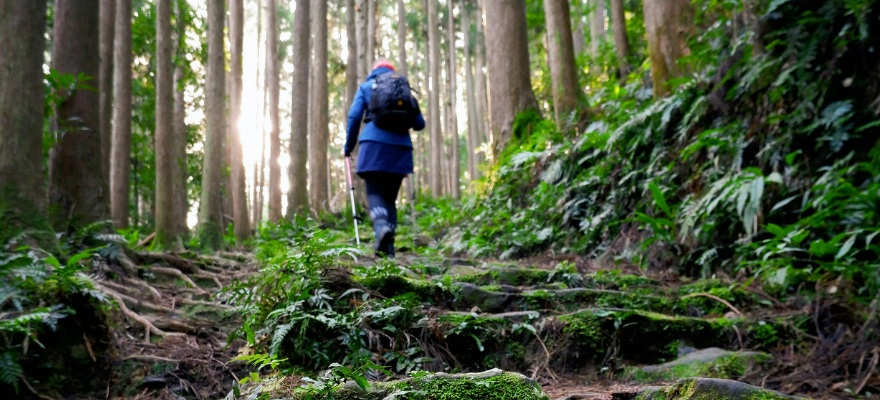
The Pilgrimage of Returning
Based on a talk by Rev. Fr. Pachomius Ma. San Juan, OSB
One of the beautiful insights of the Benedictine monk John Main is that the deepest treasures of Christian spirituality were never meant to remain hidden within monastery walls. Drawing from the wisdom of the Desert Fathers, the first Christian monks who sought God in the silence of the deserts, John Main showed that the contemplative path belongs not only to monks and nuns, but to every Christian.
The heart of the monastic tradition has always been simple: the search for God. This search is not reserved for a select few. It is the vocation of every baptized person. Nor is it merely a private quest for personal holiness. We seek God together. We journey together. As members of one Body, our growth in holiness strengthens not only ourselves but the communities to which we belong.
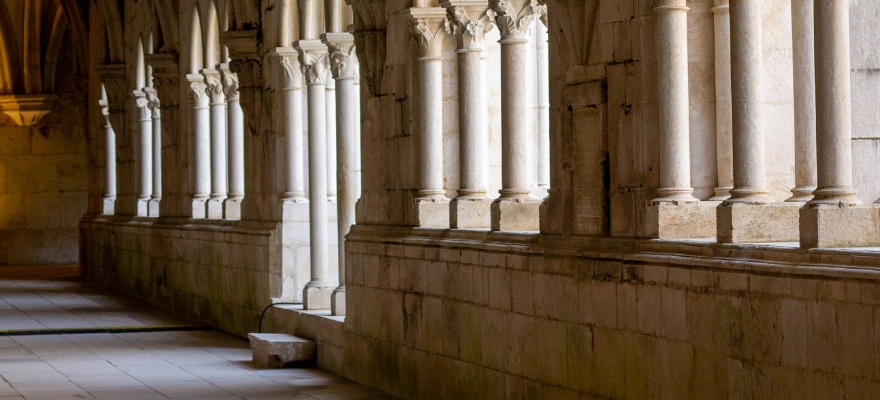
John Main believed that the ancient monastic spirit could be lived in ordinary life through one faithful practice: meditating every morning and every evening. In the quiet discipline of daily meditation, we participate in a tradition that stretches back to the earliest centuries of Christianity.
The spirit within
Christian meditation reminds us that beneath our restless thoughts lies something deeper, a spirit within us that continually reaches toward God.
This inner spirit is what enables us to rise after failure, to hope when circumstances seem hopeless, and to discover meaning even in suffering. It is the quiet strength that refuses to surrender to despair. Yet this inner resilience is not self-generated. It draws its life from the Spirit of God. Without God’s presence, our own strength eventually grows weary. Connected to Him, however, we discover a hope that endures.
Meditation gently nurtures this connection. It is not an escape from reality but a return to the deepest reality of who we are in God.
Prayer beyond words
John Main often emphasized that Christian meditation is experiential rather than theoretical. It is an encounter, not an academic subject. One may read countless books on prayer, memorize spiritual teachings, and become familiar with every school of Christian spirituality. Yet knowledge alone cannot substitute for prayer itself.
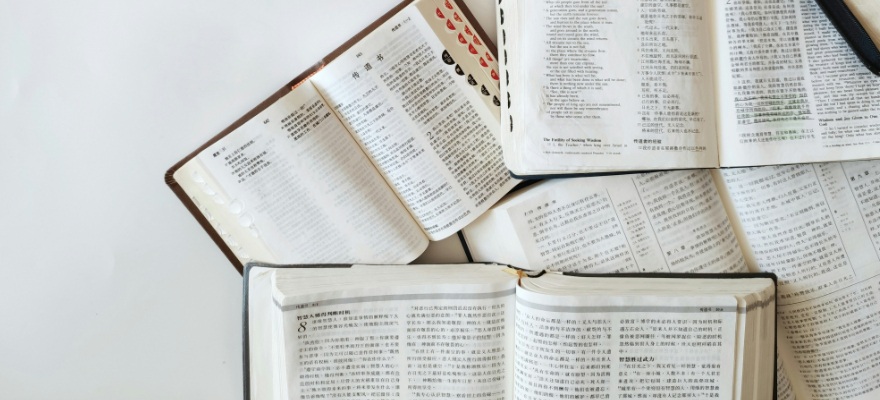
A memorable image illustrates this truth: knowing everything about prayer without actually praying is like owning a car manual without ever driving a car. Information, however valuable, cannot replace experience. Meditation invites us beyond ideas into relationship.
Learning to let go
One of the greatest obstacles to prayer is the ego’s desire to control. We often approach spiritual life hoping to achieve something: greater peace, profound insights, or remarkable experiences. But the contemplative tradition teaches a different way. Meditation calls us to let go, not only of distractions, but also of our need to manage, measure, and master our spiritual lives.
This is why John Main described the mantra not as a technique but as a discipline. A technique seeks results. A discipline forms the heart.
The sacred word Maranatha, an ancient Aramaic expression meaning “Come, Lord”, serves as an anchor during meditation. Repeated silently and gently throughout the prayer period, it steadies the wandering mind without forcing it. We are not asked to analyze the word, imagine it, or reflect upon its meaning during meditation. We simply return to it with love whenever we notice our attention has drifted.
In this repeated returning, the ego gradually loosens its grip.
Returning is the prayer
Perhaps the greatest consolation for anyone who meditates is this: distraction does not mean failure.
Our minds naturally wander. Thoughts arise. Emotions surface. Memories interrupt. Rather than becoming discouraged, the tradition offers a simple response. Notice. Return. Begin again.
Francis de Sales beautifully expressed it: if your heart wanders a thousand times, bring it back a thousand times. Each return is not a defeat. It is an act of love.
Every time we gently come back to the mantra, we quietly choose God again. Meditation is therefore not measured by how peaceful we feel or how free we are from distractions. It is measured by our willingness to return.
Even dry prayer, perhaps especially dry prayer, becomes a school of humility. In those moments we discover our dependence on grace rather than our own efforts.
A pilgrimage of faithfulness
John Main described meditation as a pilgrimage. A pilgrim is not someone who arrives quickly. A pilgrim simply keeps walking.
The rhythm of meditation is wonderfully ordinary: We sit. We say the mantra. We become distracted. We return. We continue. Then we begin again the next day. There are no dramatic moments to manufacture, no extraordinary experiences to chase. The journey itself transforms us. Faithfulness, more than feelings, becomes the path. Morning after morning. Evening after evening. One prayer at a time.
The simplicity may even seem repetitive, but beneath that simplicity the Holy Spirit is quietly at work. While we faithfully repeat the mantra, God patiently shapes the heart.
Perhaps that is the greatest invitation of Christian meditation: not to perform well, but simply to show up. Christ already knows we will be distracted. He knows our weaknesses before we begin. Yet He waits for us in the silence. He remains present even when our minds are scattered.
Our task is not perfection. Our task is simply to keep returning. And in that faithful returning, day after day, we gradually discover that the pilgrimage was never about becoming extraordinary. It was always about allowing ourselves to be led, little by little, into the quiet depths of God.