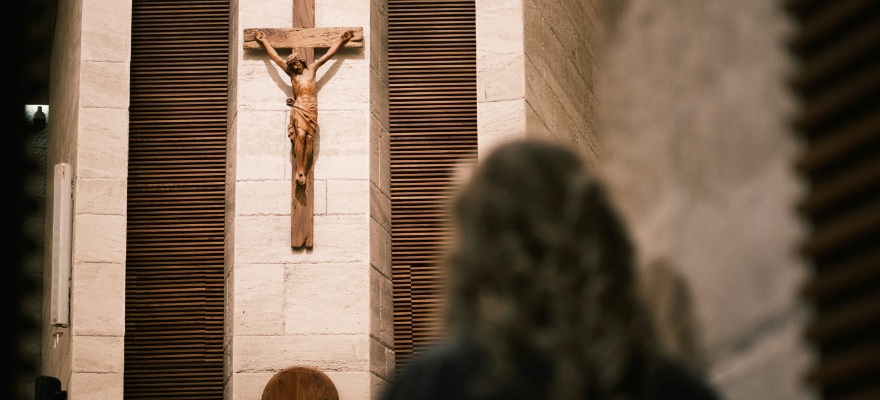
From Awareness to Communion: Rediscovering John Main’s Vision of Christian Meditation
Based on a talk by Rev. Fr. Pachomius Ma. San Juan, OSB
A few weeks ago, a dream about John Main prompted me to return to his writings and teachings on Christian meditation. The dream itself was brief, but it opened a space for reflection. As I revisited his work, I found myself struck once again by the simplicity of his message.
What John Main taught about prayer was never intended to be obscure or esoteric. He was not concerned with constructing a complex spirituality for a select few. His concern was far more direct: helping ordinary people encounter God in the silence of their own hearts.
That simplicity may be one reason his teaching continues to resonate today.
Awakening to the spirit within
One of the recurring themes in John Main’s teaching is the importance of experience. Meditation is not merely a subject to study or a method to analyze. It is a path of discovery.

Through the practice of silence, we gradually become aware of a reality that often goes unnoticed amid the noise and distractions of daily life. We rediscover what might be called the human spirit, that inner capacity to persevere through hardship, to rise after failure, to remain hopeful in times of uncertainty, and to search for meaning beyond mere survival.
Most of us have experienced this spirit at work. We see it in people who endure suffering with dignity, in those who continue loving despite disappointment, and in those who refuse to surrender to despair. There is something within the human person that continually reaches beyond limitation.
Yet Christian meditation invites us to see even more deeply. The human spirit does not exist in isolation. It is animated and sustained by the Holy Spirit. The courage, generosity, resilience, and compassion we discover within ourselves ultimately draw their life from God.
In this sense, meditation becomes an act of awakening. It helps us become sensitive once more to the presence of both our own deepest self and the Spirit of God dwelling within us.
This awakening feels especially necessary in a culture that often leaves little room for interiority. Surrounded by constant stimulation, endless information, and growing cynicism toward institutions and leaders, many people find themselves disconnected from the deeper dimensions of life. The practice of meditation gently restores that connection.
Joining the ancient search for God
John Main often emphasized that Christian meditation belongs to a tradition far older than our modern world.
Its roots reach back to the desert monks and nuns of the fourth century. Drawn by a profound longing for God, they left behind the distractions of society and journeyed into the wilderness of Egypt, Palestine, and Syria. There they sought simplicity, silence, and an undivided heart.

Their search was not driven by curiosity but by desire, the desire to know God. That same search continues today.
While few of us are called to the physical deserts inhabited by the early monks, we all carry within us a longing for something stable and trustworthy. Amid a world of constant change, we seek a foundation strong enough to support our lives. For the Christian tradition, that foundation is the Word of God.
Scripture is more than a collection of sacred texts. Through it, God continues to speak. The biblical word becomes a place of encounter, a living presence that guides and sustains the believer.
This is why the mantra used in Christian meditation is rooted in Scripture. John Main recommended the ancient Aramaic prayer “Maranatha”—”Come, Lord.”
Repeated faithfully, the mantra becomes like an anchor dropped into deep water. It steadies the mind amid life’s shifting currents and gradually grounds the heart in God’s presence.
The pilgrimage of the mantra
One of John Main’s most important insights is that meditation unfolds through discipline rather than achievement.
Modern culture often trains us to measure everything according to results. We evaluate our efforts by what they produce. Spiritual practice can easily fall into the same pattern. Meditation offers another way.
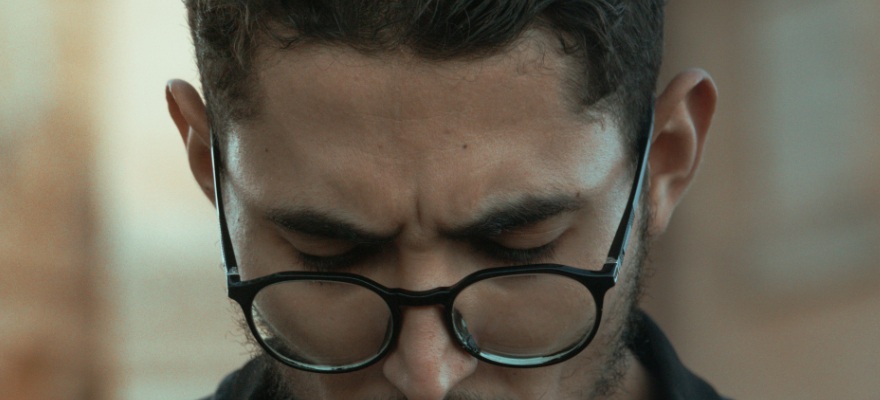
The faithful repetition of the mantra invites us to relinquish the need to measure, control, and succeed. Instead of striving for extraordinary experiences, we learn to return repeatedly to a single word. Over time, that simple act reshapes the heart.
The mantra teaches patience. It teaches attentiveness. It teaches fidelity. Its work is subtle. As the word settles within us, it gradually moves from the mind to the heart. What begins as deliberate repetition becomes an interior rhythm. The prayer accompanies us, often beneath conscious awareness, like a quiet current flowing through the depths of our lives.
John Main expressed this beautifully when he encouraged meditators to “say the mantra until you can no longer say it.”
There comes a point when the prayer seems to continue by itself. The word has become rooted within us. This does not mean distractions disappear. Thoughts, emotions, worries, memories, and unresolved wounds continue to arise. The practice of meditation does not eliminate them. Instead, it teaches us how to respond.
Each distraction becomes an opportunity to begin again. The task is wonderfully simple: return to the word. Without judgment. Without discouragement. Without analysis. Just return.
Meditation resembles a pilgrimage more than a performance. Pilgrims encounter unexpected detours, difficult terrain, and moments of uncertainty. Yet what matters is remaining on the path.
The same is true in prayer. Every meditation session is a new beginning. Whether one has practiced for six months or sixty years, the invitation remains the same: sit down, say the word, and begin again.
From silence to communion
Although meditation is practiced in silence, it does not lead us into isolation. One of the great paradoxes of contemplative prayer is that the deeper we enter our own hearts, the more we discover our connection to others. Silence becomes fertile ground for community.
This insight was central to the early monastic tradition and remains central today. Communities of meditation create spaces where people support one another through friendship, listening, encouragement, and shared commitment.
The contemplative journey is deeply personal, yet it is never merely private. We help one another grow. We accompany one another through struggles. Together we learn to move beyond self-centeredness and discover our identity as persons loved by God.
Perhaps this is why John Main often described meditation as a creator of community. Shared silence forms bonds that words alone cannot create.
Entering the life of the Trinity
Ultimately, Christian meditation points beyond self-awareness toward communion with God.
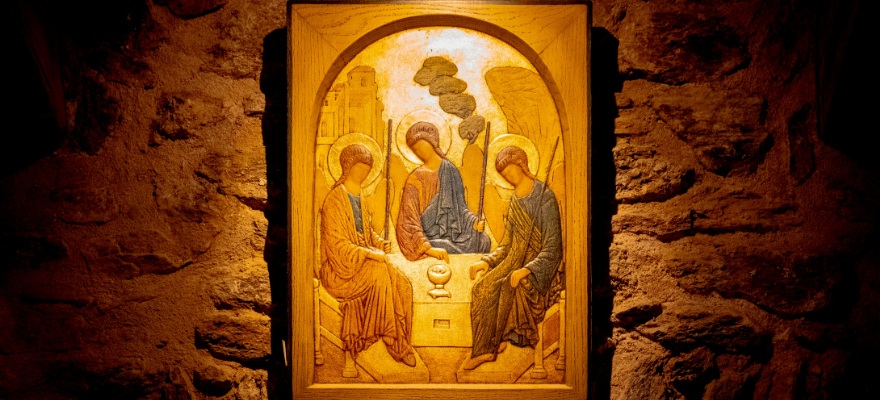
For John Main, the deepest meaning of prayer is found in the mystery of the Trinity. As we enter silence, we discover that prayer is not simply something we initiate. The Spirit is already praying within us. The Son is already drawing us toward the Father. What we call prayer is our participation in a divine movement that precedes us and sustains us.
This understanding transforms the way we view meditation. The practice is no longer merely our effort to reach God. It becomes our participation in the life of God already present within us.
Through Christ, we are drawn into the loving communion of Father, Son, and Holy Spirit. Our prayer becomes united with the prayer of Jesus himself. Our silence becomes a sharing in the silence of God.
We enter this mystery carrying all our imperfections, wounds, and limitations. Yet within the life of the Trinity, these are gradually transformed. We are healed, formed, and renewed. In this communion we discover our true humanity.
A living tradition
What continues to impress me about John Main is his ability to make an ancient tradition feel alive and accessible.
The wisdom of the desert monks remains remarkably relevant because it speaks to enduring human needs: the need for silence, the need for meaning, the need for community, and the need for God.
Christian meditation gathers these needs into a simple daily practice. It asks for no extraordinary gifts, only faithfulness. Sit down. Become still. Say the word. Begin again.
In that humble discipline, the ancient search for God continues.
And in that search, we discover that we are never searching alone. The Spirit is already at work within us, drawing us toward the fullness of life found in the communion of the Trinity.