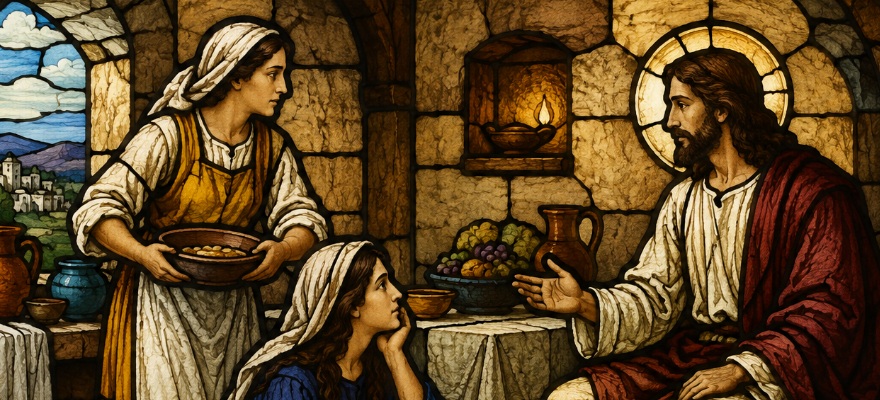
Discipled by Bethany: What Mary, Martha, and Lazarus Teach About Contemplation
Based on a formation talk by Rev. Fr. Pachomius Ma. San Juan
There are places in the Gospels that seem to exist not only on a map but also within the human heart. Bethany is one of them.
When we hear the name Bethany, we naturally think of the home of Martha, Mary, and Lazarus, the siblings whom Scripture repeatedly describes as close friends of Jesus.
Yet Bethany is more than a village near Jerusalem. It is a spiritual home. It is a way of living. It is a picture of what the contemplative life is meant to become.
The story of these three siblings reminds us that, far from escaping life, Christian meditation journeys into its deepest meaning.
More than spiritual experiences
John Main, the Benedictine monk who helped renew the practice of Christian meditation, often reminded his students that meditation is not about chasing extraordinary mystical experiences. Its purpose is far simpler, and far more demanding.
Meditation allows Christ to live more fully within us.
The profundity of our meditation experience is not the true measure of prayer. Prayer reveals its fruit in how deeply our lives are transformed. That transformation is beautifully illustrated in the household of Bethany.
Mary: Choosing presence
Mary is perhaps the most familiar of the three. While Martha busies herself with preparations, Mary sits quietly at Jesus’ feet, listening. Jesus’ response surprises us, because rather than asking Mary to help, He says that she has “chosen the better part.”
This is a reminder that before we can do anything for Christ, we must first learn simply to be with Him. Meditation teaches exactly this.
Faithfully returning to the sacred word whenever our minds wander is an act of love. Every return is another quiet “yes” to God’s presence.
In a culture that constantly rewards productivity, Mary reminds us that our first calling is presence. Sometimes the holiest thing we can do is simply remain attentive to Christ.
Lazarus: Living the Resurrection
Lazarus speaks no recorded words in the Gospels. Yet his very life becomes a testimony.
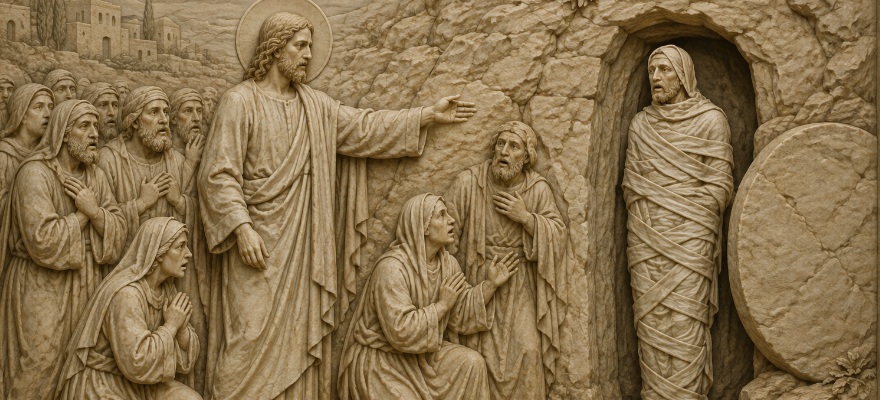
Raised from the tomb by Jesus, Lazarus becomes a living sign of resurrection. Although his return to earthly life was temporary, it points toward the greater resurrection that Christ would accomplish forever.
Meditation calls us into that same mystery. Every day we hear Christ gently calling us from the tombs that imprison us. Fear, resentment, ego, false identity, bitterness, and unforgiveness.
“Come out.” These words are not spoken only to Lazarus but to each of us.
Transformation happens slowly, often almost imperceptibly. But each faithful period of prayer loosens another stone from the entrance of our own tomb until we discover ourselves becoming more fully alive in Christ.
Martha: Service transformed by love
Martha is often remembered as the anxious hostess. Yet her story goes further.

Later in John’s Gospel, she makes one of Scripture’s most profound professions of faith: “I believe that you are the Christ, the Son of God.” This remarkable confession reveals a heart that has matured through grace.
Meditation frees us from anxious activism. Our service gradually becomes less about proving ourselves, seeking recognition, or carrying the weight of the world on our shoulders. Instead, it becomes an expression of inner freedom.
The more deeply we rest in Christ, the more naturally we are able to love others. Authentic contemplation always returns us to the world, to embrace responsibility with greater peace and generosity.
Community: The vessel of transformation
The Christian contemplative journey is never merely individual. While meditation begins in silence, it naturally blossoms into community. People who share the same longing for God gradually discover a shared depth. Their lives become intertwined, because beyond similar mindsets or personalities, Christ draws them toward the same center.
Community becomes the vessel in which transformation is lived. Like the household of Bethany, every authentic Christian community becomes a place where silence, friendship, service, and resurrection are woven together into everyday life.
Becoming all three
Perhaps the most beautiful insight from Bethany is that we need not choose one sibling over the others.
There are seasons when Mary is most alive within us, calling us back to silence and attentive listening.
There are periods when Martha teaches us faithful, generous service.
And there are times when we resemble Lazarus, slowly emerging from the tombs that have held us captive.
The goal is not to imitate only one of them, but to become all three. To sit at Christ’s feet with Mary. To serve with Martha’s transformed heart. To live with Lazarus’ quiet witness to resurrection.
Together they reveal the fullness of contemplative discipleship.
A question to carry into prayer
Perhaps the most fruitful way to end this reflection is with a question.

Which of the three siblings feels most alive in you today? Are you being invited into Mary’s silence? Into Martha’s loving service? Or into Lazarus’ new life after leaving the tomb?
The answer may change with each season of life. But the invitation remains the same.
To become a disciple of Bethany, a friend of Jesus whose silence deepens into love, whose love overflows into service, and whose entire life quietly bears witness to the risen Christ.